The practice of discovery
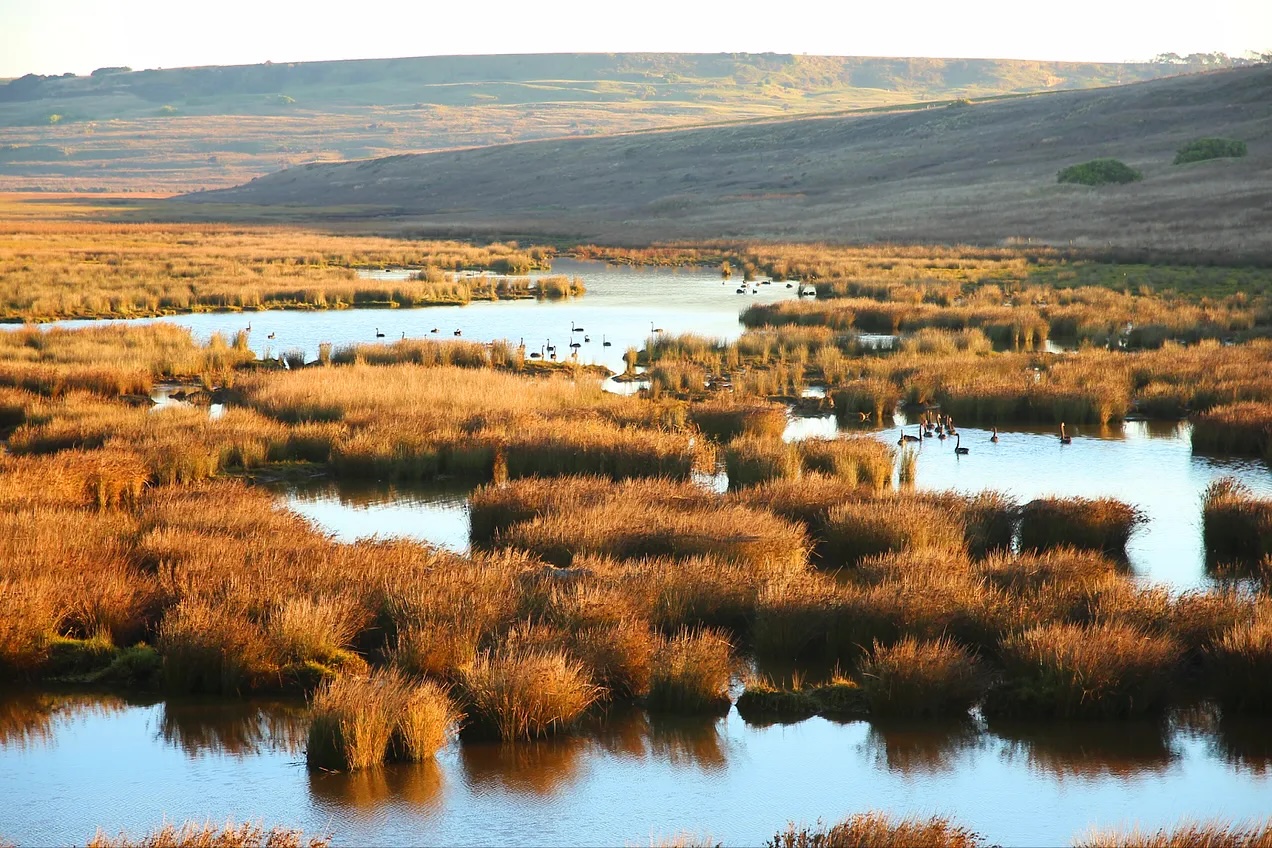
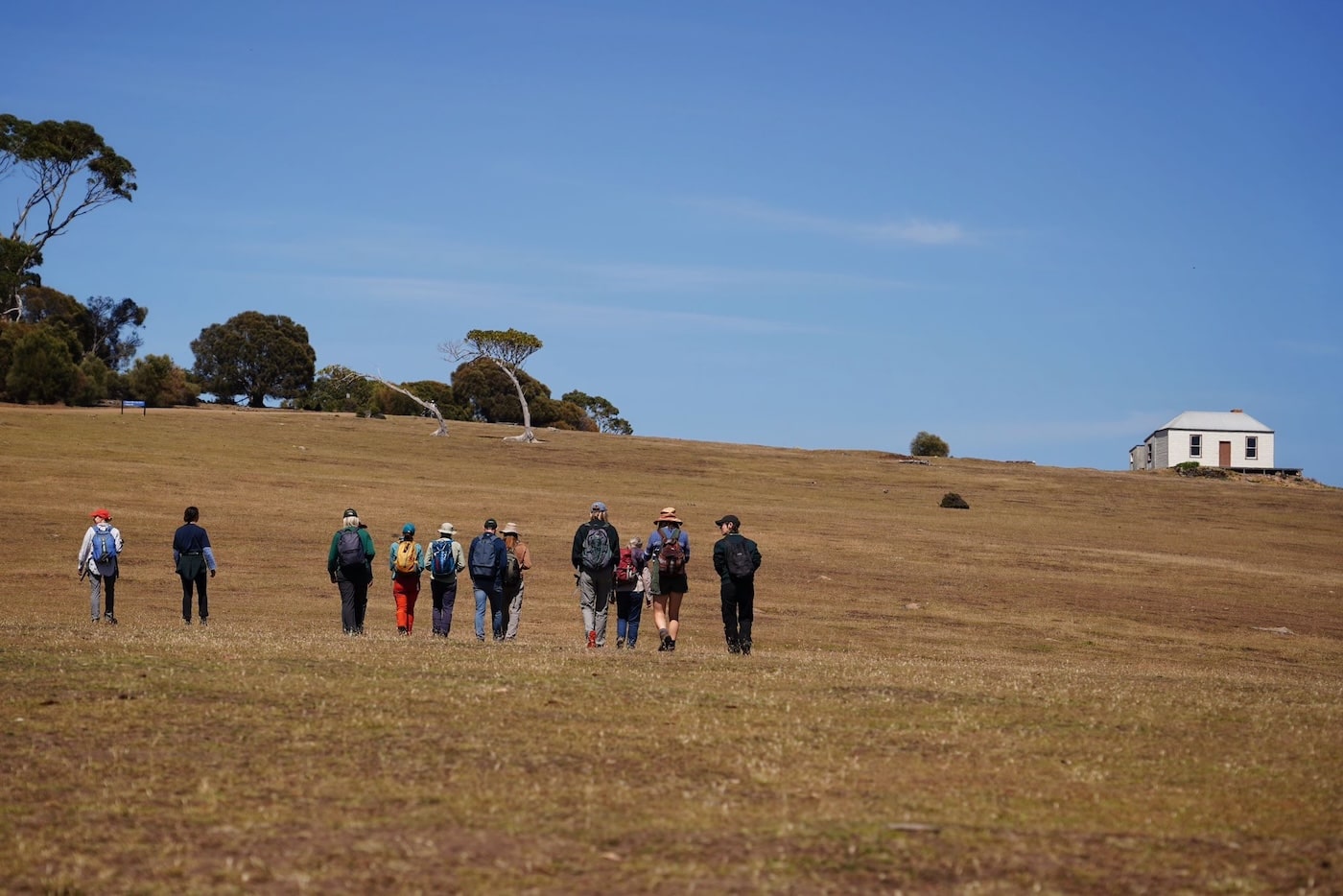
In the last week of October, 12 scientists from the Tasmanian Museum and Art Gallery (TMAG) spent five days sampling specimens at our lighthouse property, The Quoin, as part of their Expeditions of Discovery program. Each brought their own areas of interest and expertise — moss, lichen, fungi and freshwater invertebrates, to name a few — which guided their routes and ways of seeing.
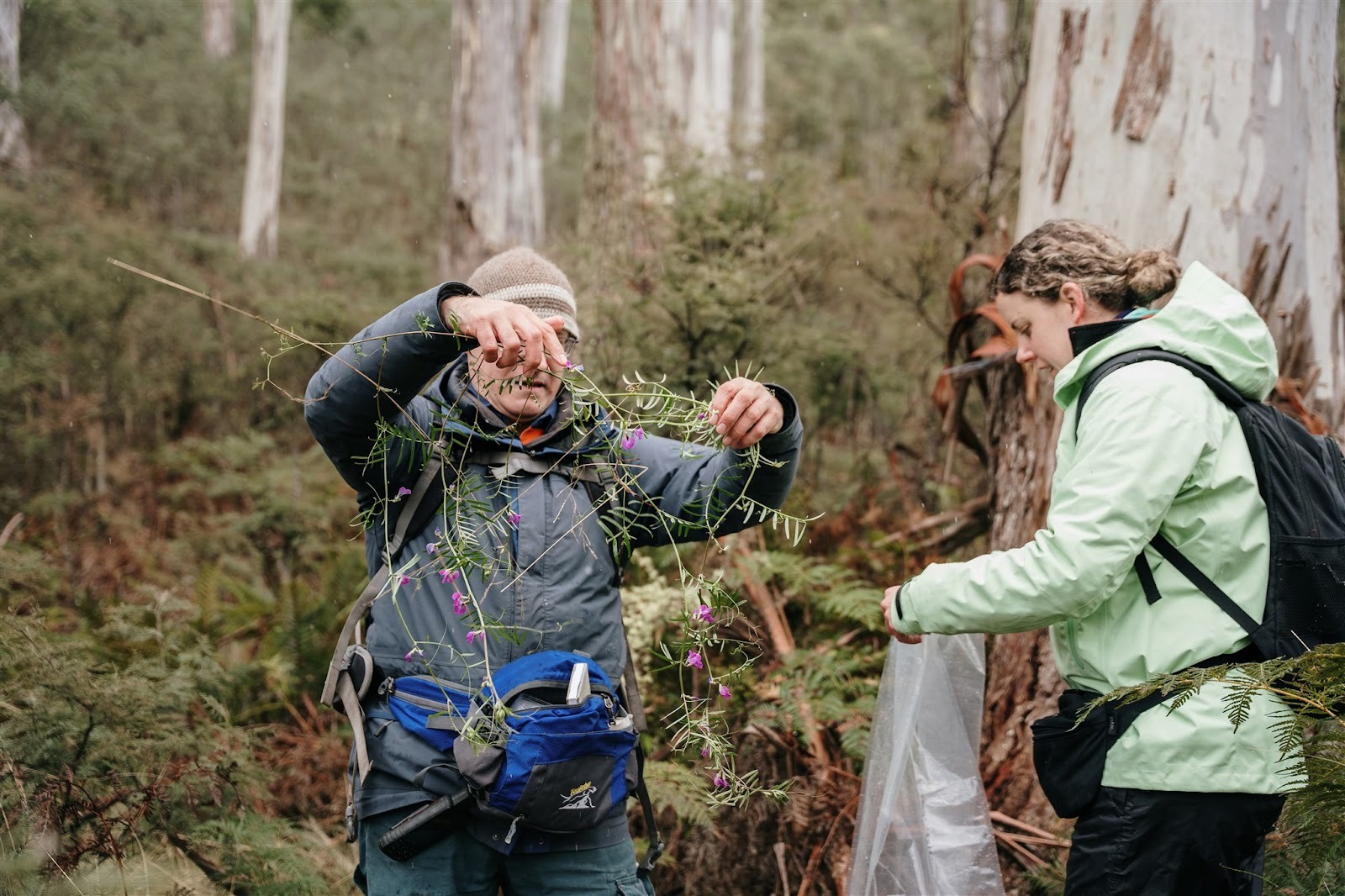
Each day, a small number of Wedgetail team members shadowed the scientists as they moved through the landscape. We were shown freshwater snails no bigger than pinheads, mosses capped with spores, and flowers so small we had to lie flat on the ground to see them. Along the way, we learnt new names, and with them, the relationships between species and the systems they belong to.
By the end of the week, we were walking through a landscape that felt newly detailed. Nothing about the land had changed; the difference was language. Names are not just labels, they are lenses that sharpen attention. Often, it is only once we have the words that we can truly see.
Since 2017, TMAG’s Expeditions of Discovery have taken researchers into under-sampled landscapes, adding thousands of specimens to the state collection, many new to the region, and some new to science. These expeditions show what becomes possible when public institutions and private landholders work together: advancing science, strengthening stewardship, and turning knowledge into a shared public asset for the living world we all depend on.
The Expedition of Discovery at The Quoin was supported by a Wedgetail grant, one of several partnerships we’ve begun in recent months. This newsletter shares more of what’s been happening across Wedgetail — from new loans and grants to the relationships and practices shaping our work.
Other recent grants
In the past four months, the Wedgetail Foundation has provided funding to a number of organisations, furthering our mission to support and fund the frontiers of biodiversity regeneration. These include:
FCAT
Protecting critically endangered species in Ecuador’s Chocó rainforest
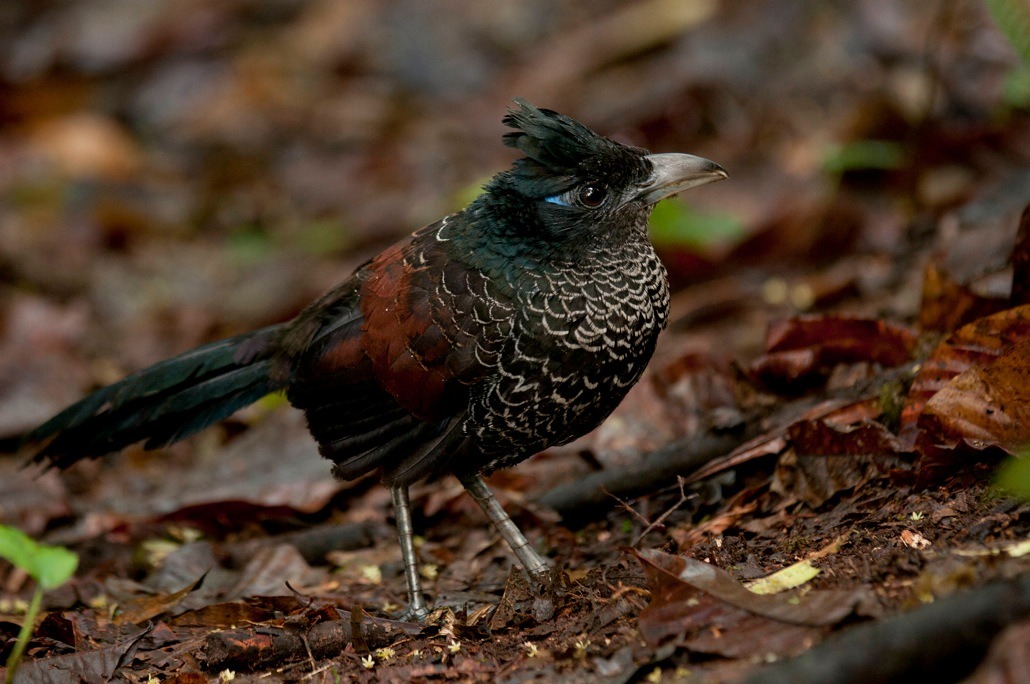
The Foundation for the Conservation of the Tropical Andes (FCAT) is working to protect and restore Ecuador’s Chocó rainforest through a mix of community-led science and ecological monitoring. This area is one of the world’s richest yet most threatened biodiversity hotspots, and is home to 49 IUCN-listed species, including the critically endangered banded ground-cuckoo and mache glassfrog.
At the heart of FCAT’s work is a 700-hectare reserve, which is both protected habitat, and a base for science and education. Over the coming years, FCAT plans to connect the reserve with the nearby Laguna de Cube wetlands and the forested Bilsa Biological Reserve by creating a 7,000-hectare wildlife corridor. A Wedgetail grant supports this work by funding ecological monitoring across FCAT’s restoration and agroforestry sites, employing a lead scientist and deploying cameras and audio recorders to monitor bird, frog, mammal and insect diversity. This project’s aim is to identify what regenerative approaches best serve both biodiversity and local people, and to use these insights to guide future restoration, reserve expansion and agroforestry design.
With numerous international awards and more than 50 peer-reviewed papers to its name, FCAT is demonstrating how community-led science can deliver lasting conservation outcomes.FAME
FAME
From local extinction to recovery in South Australia’s rugged ranges
The Foundation for Australia’s Most Endangered Species (FAME) funds and facilitates projects to save Australia’s endangered native flora and fauna.
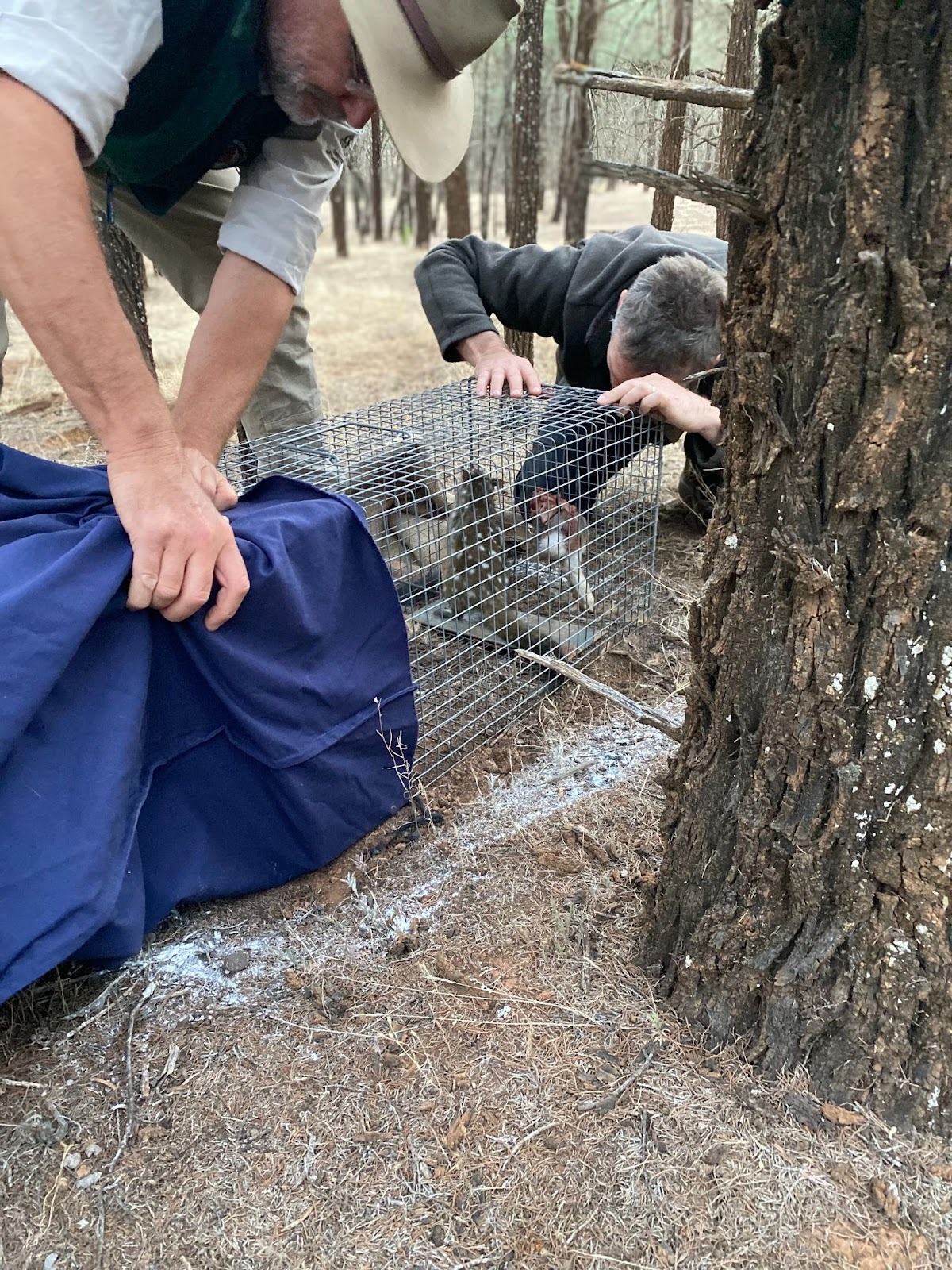
One of these species is the western quoll (Dasyurus geoffroii), a nocturnal predator once thought locally extinct in South Australia. After FAME successfully reintroduced the species in 2014, efforts have now turned to expanding its range. Alongside other funding, a Wedgetail grant supports FAME to create a corridor for the western quoll between Ikara–Flinders Ranges and Vulkathunha–Gammon Ranges National Parks.
Over three years, the project will reintroduce populations, implement intensive predator control, engage local rangers, restore habitat and strengthen genetic diversity. Regular camera trapping, tracking and DNA sampling will monitor progress and measure outcomes. As a top-order predator, the western quoll helps maintain balance across its ecosystem, keeping prey species in check and signalling the health of the landscape itself.
eARTh Agency
Storytelling that brings the African penguin’s plight into view
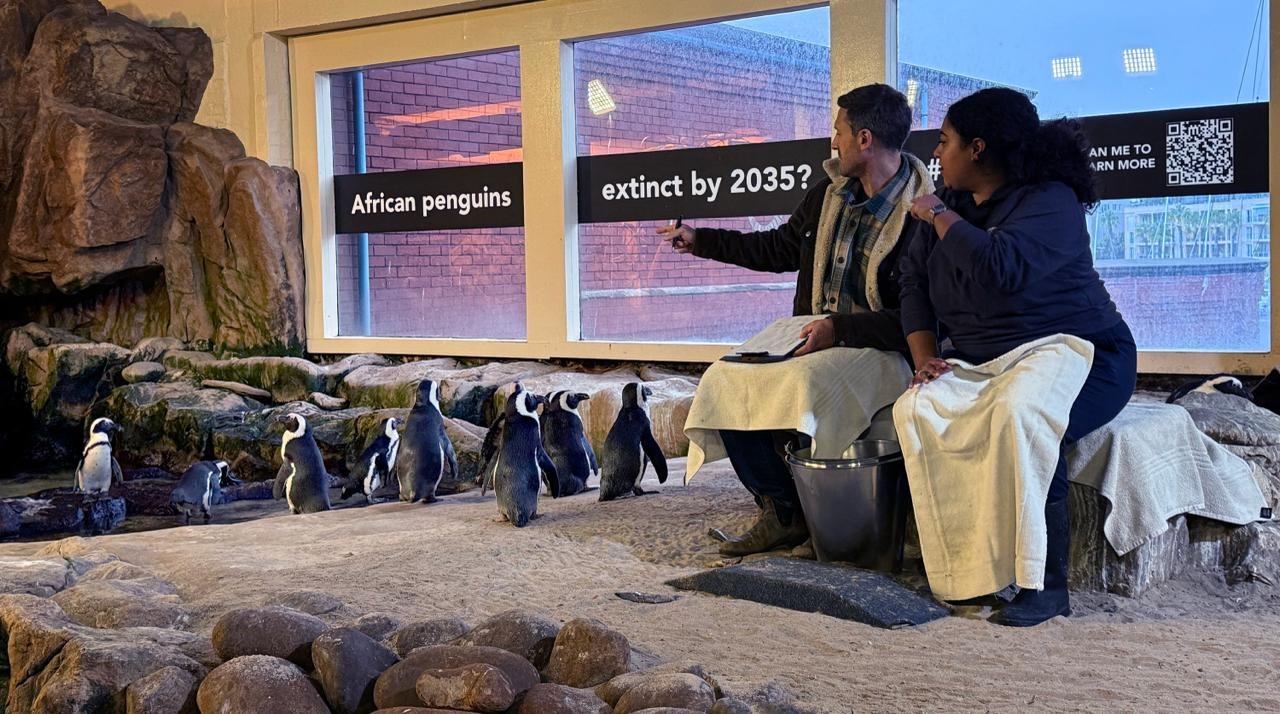
Scientists predict the African penguin could be extinct within ten years. Along South Africa’s coast, less than one per cent of the population that existed a century ago survives. Yet their decline has unfolded largely out of sight — a story happening just beyond public attention.
This is the space in which eARTh Agency works. A not-for-profit ecological storytelling studio, they use public space art and film, alongside artists, NGOs and communities, to help shift how people relate to the natural world.
With support from Wedgetail and others, eARTh Agency is developing Penguin, a multi-format storytelling campaign designed to create opportunities for people to engage with science on their own terms. Its centrepiece is The Last Breeding Pair, a large-scale sculpture by internationally recognised artist Daniel Popper, which will be permanently installed at Cape Town’s V&A Waterfront, which received 26 million visitors last year.
In a landscape saturated with bad news and doomsday narratives, eARTh Agency believes that curiosity and wonder can be a means to foster care and ignite action.
ReForest Now
Strengthening ecological and economic resilience in one of Sumatra’s wildest parks
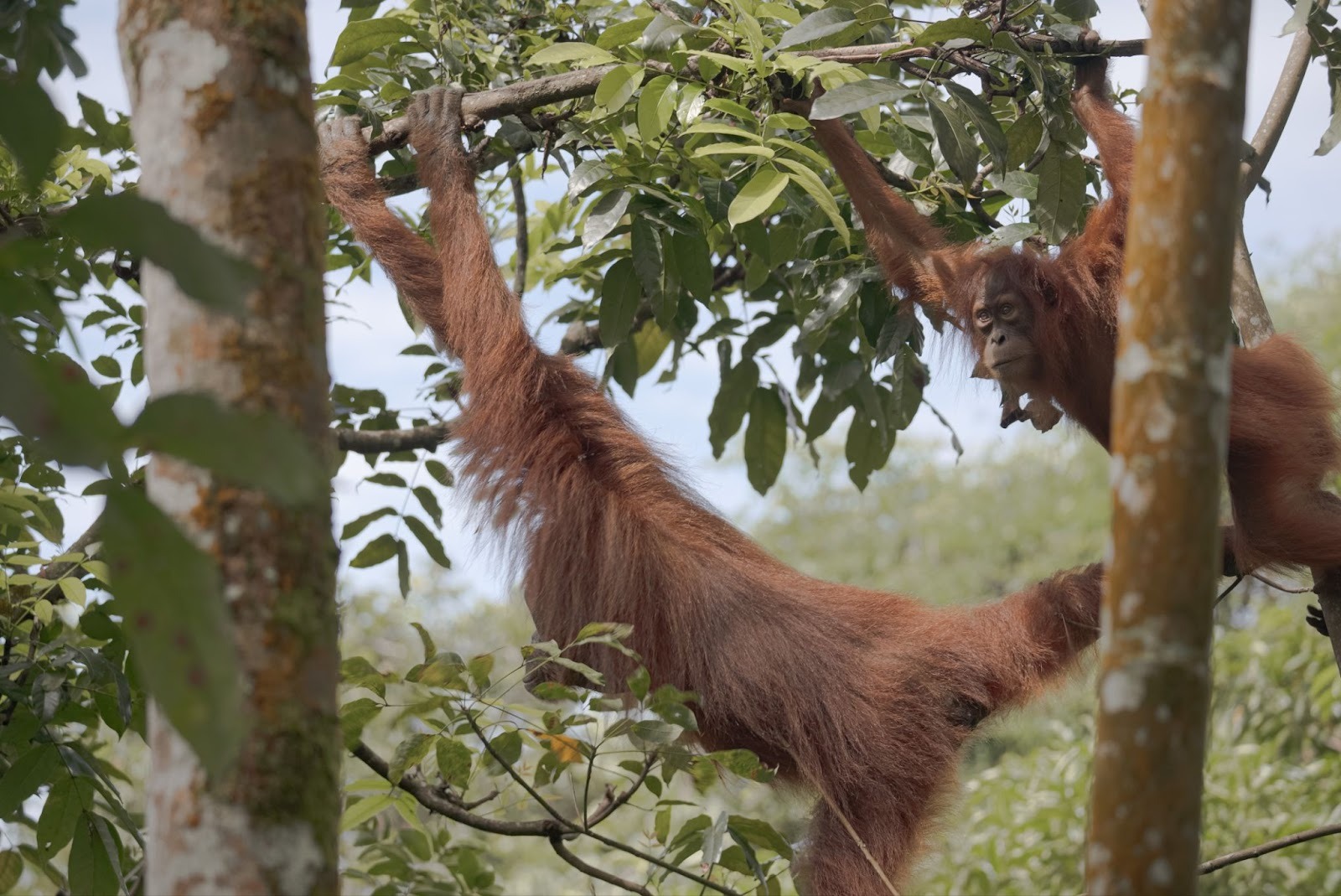
In the far north of Sumatra is the last place on Earth where wild tigers, elephants, orangutans and rhinoceros still share habitat. Gunung Leuser National Park is uniquely biodiverse and extraordinarily beautiful, but it’s also under sustained pressure from illegal logging, poaching and wildlife trade.
ReForest Now is part of a growing partnership between local communities, park authorities and institutions working to secure the park’s future. Their work helps bring together two strands of regeneration: restoring illegally cleared land, and supporting local livelihoods and poaching patrols to reduce the pressures that drive deforestation. A Wedgetail grant supports the work of a patrol team, as well as the planting of 15,000 trees across five hectares, generating jobs for 54 community members in restoration and a further dozen through local nurseries.
To date, ReForest Now and its Indonesian partners have planted 321,000 trees across the site, comprising 81 native species, ranging from canopy species to fruiting and medicinal plants. Together, these efforts show how restoration, conservation and community development reinforce one another, improving biodiversity in the present and safeguarding it into the future.
Recent loans
We’ve deployed a new loan through Wedgetail Ventures, furthering our mission to conserve and restore biodiversity through sustainable investment.
Equilibria
Seeding lime trees and livelihoods in the Magdalena–Cauca basin
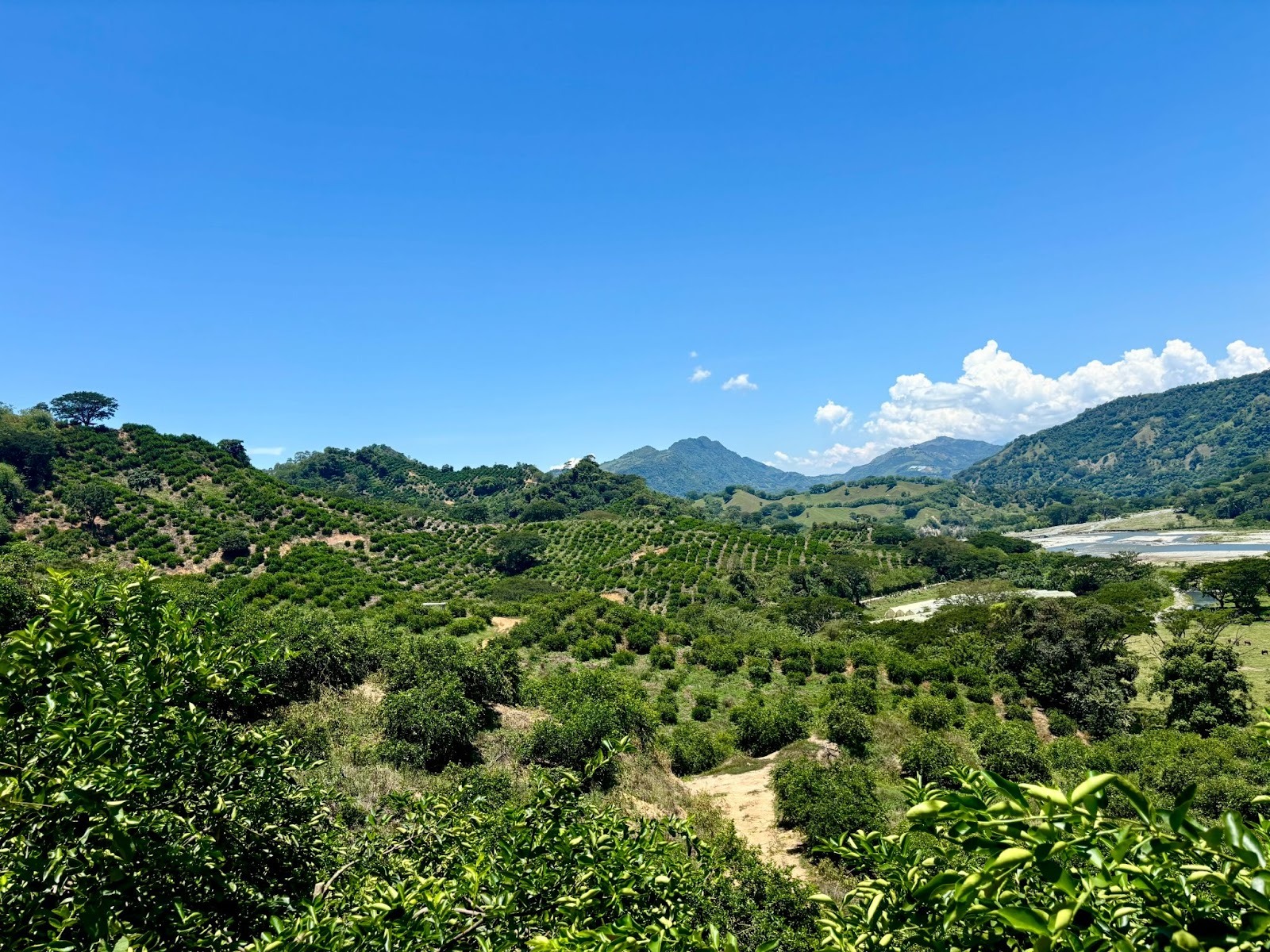
Equilibria is one of Colombia’s leading producers and exporters of sustainably grown Tahitian limes — operating through an integrated agricultural ecosystem designed to deliver organised, traceable and sustainable production. Its success is defined as much by restored forests and strengthened local livelihoods as by the quality of the fruit it ships.
Across the Magdalena–Cauca basin, Equilibria works with smallholder farmers to transition former cattle lands into productive Tahitian lime orchards, while setting aside and restoring native forest within the same properties. These farms sit within the Arma River subzone, meaning sustainable practices help safeguard the rivers that many Colombian communities rely on. A Wedgetail nature-linked loan supports Equilibria in advancing this nature-positive strategy. Today, around 180 hectares of secondary forest are conserved — representing close to 20% of the land under management — with a three-year roadmap to conserve and restore an additional 100 hectares of degraded land.
At the core of Equilibria is a vertically integrated ecosystem that brings together a registered nursery, owned and partner farms, technical assistance and export capabilities — all underpinned by a technology stack that functions as a field-to-market operating system. This model demonstrates that it is possible for people, planet and productivity to coexist within a deliberately redesigned agricultural value chain.
Opening panel at the ALCA Conference
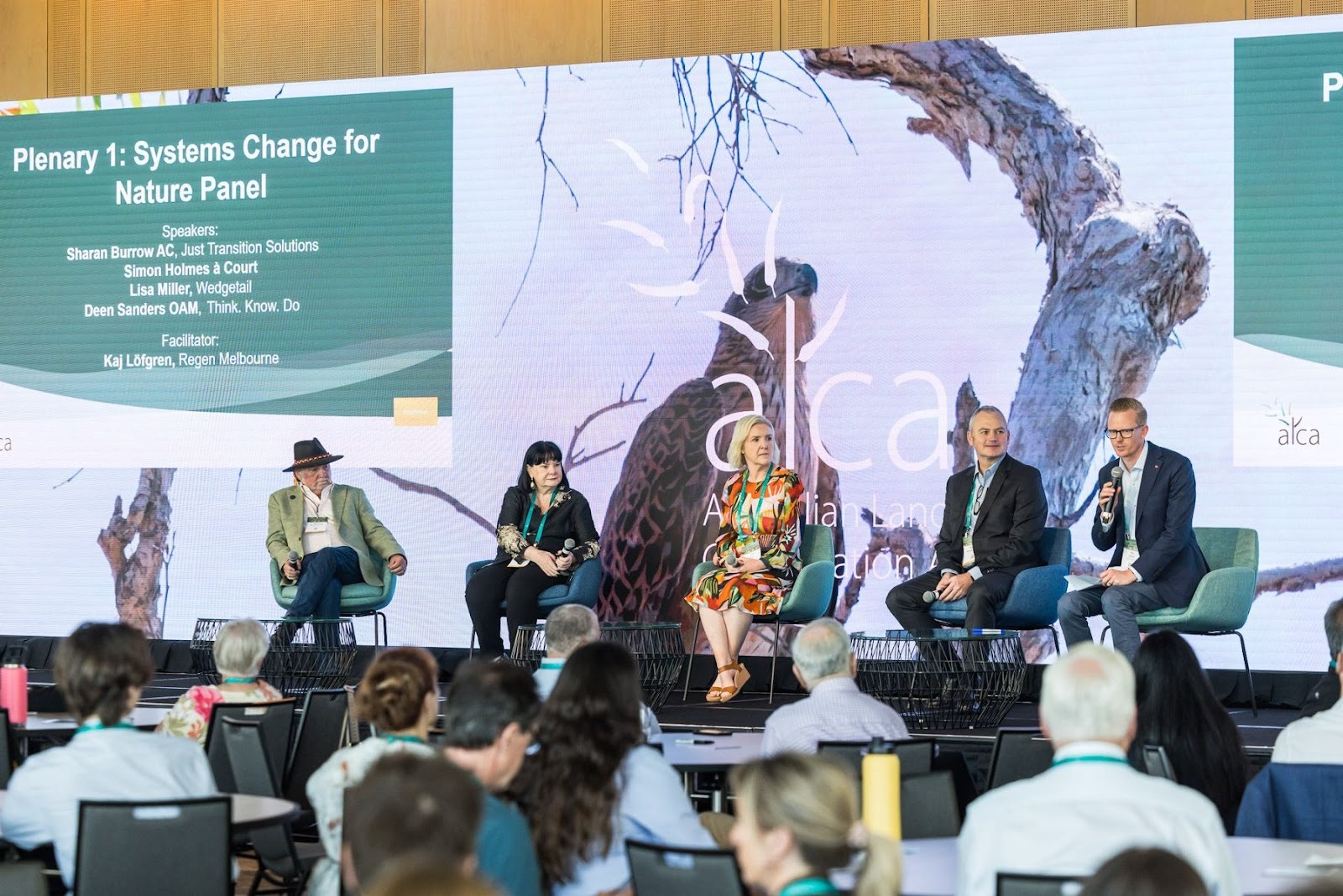
This year’s Australian Land Conservation Alliance (ALCA) conference was held in Cairns under the theme ‘scaling up: local action for global solutions’. Our CEO Lisa and Head of Foundation Karina attended, with Lisa joining the opening panel on systems change for nature.
The conversation was rich and wide-ranging, moving from capital and policy to the on-ground realities of caring for land. Sharan Burrow, Simon Holmes à Court, Deen Sanders and Kaj Löfgren each brought distinct, cross-sector perspectives, holding the room with a discussion that was both grounded and expansive. Time, rather than interest, brought the session to a close.
Dinner with Treasurer Jim Chalmers and Finance Minister Katy Gallagher
Our CEO Lisa joined a small dinner hosted by the Invasive Species Council with Treasurer Jim Chalmers and Finance Minister Katy Gallagher, alongside Invasive Species Council CEO Jack Gough, former South Australian Deputy Premier and Environment Minister Susan Close, and Cedar Grove Landcare Director Rachel Hughes. As Lisa later wrote on LinkedIn, the conversation was genuine, wide-ranging, refreshingly practical, grounded in lived experience and focused on the need for action across nature and climate. There was a shared sense in the room of both what we stand to lose and what we stand to gain, and of the untapped opportunity for local communities, philanthropists, not-for-profits, businesses and governments to collaborate in more ambitious and meaningful ways.
Offsite
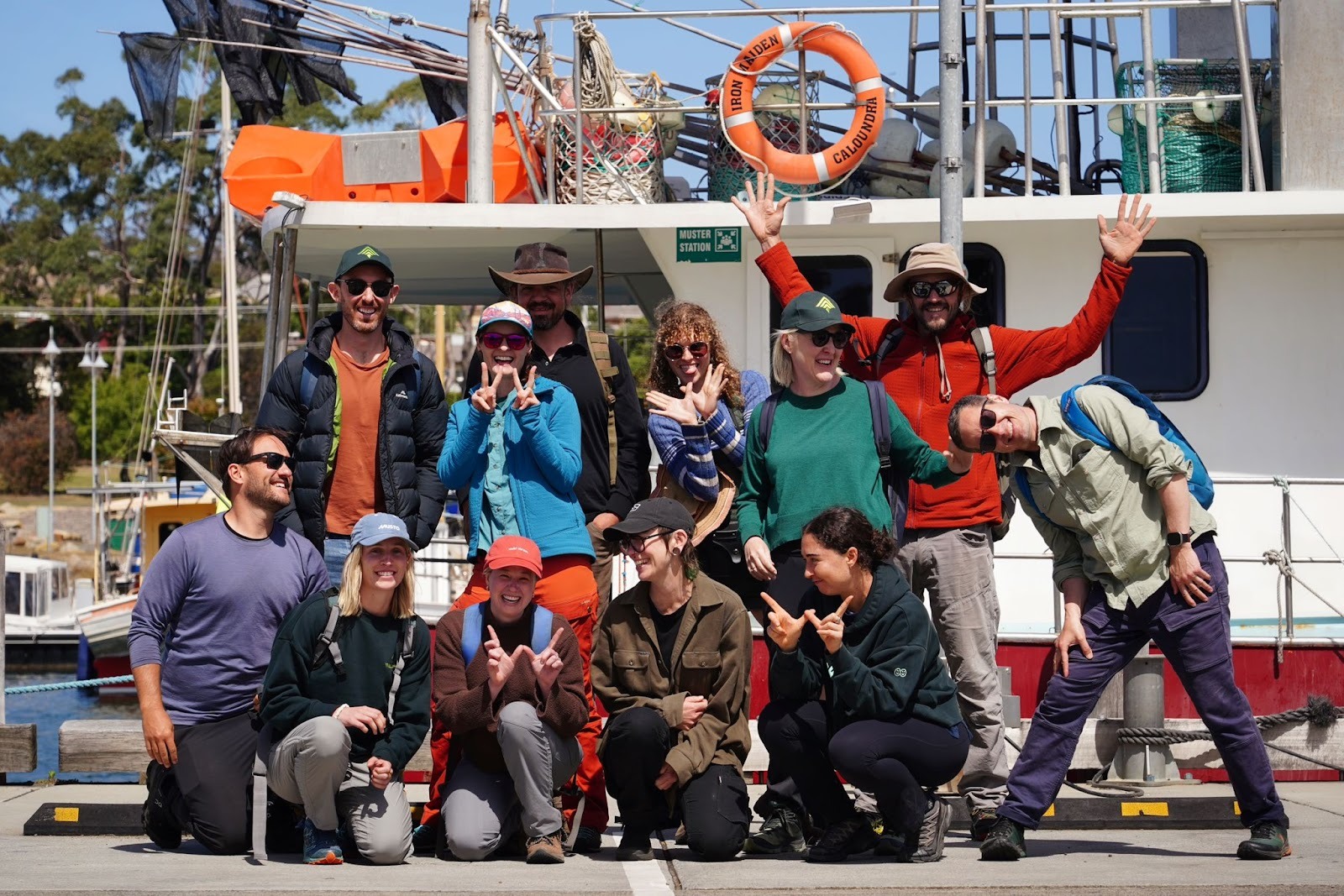
In early December, the Wedgetail team came together in Lutruwita/Tasmania for a five-day offsite — a chance to slow down, spend time together, and look ahead to 2026 and beyond. Time in nature was a big part of the week: we spent two nights at Spring Bay Mill, learning about the site’s layered history, and travelled to Maria Island with Inala for a day of bird-watching and walking. Between shared meals and fun-filled activities, we made space for deeper strategy conversations — surfacing new ideas, sharpening priorities, and celebrating just how much momentum we’re carrying into the years ahead.
Updates from The Quoin
As usual, it’s been a busy few months at our living laboratory. Highlights include:
- Orchids scattered across forest floors;
- Wallaby joeys emerging from their mothers’ pouches;
- Learning that seven litters were born from the 24 eastern quolls released on site in February;
- Publishing four new editions of The Quoin Journal, including one on how we learn from aerial images;
- Hosting an Australian Environmental Grantmakers Network field trip, where we shared our work and learnt more about the great work other philanthropic foundations are doing for nature;
- Building our largest leaky weir to date — three times the length of earlier designs, with rip lines and pockets of rocky habitat — and returning a week later to find it streaked with bird droppings, a small but satisfying sign that new habitat is already being used;
- Shifting from planting mode to management mode at our Honeysuckle Flat restoration site;
- Learning from our property manager Andrew that a breeding pair of wedge-tailed eagles were using the nest at Penny Hill; and
- A seemingly ordinary October morning that brought an unexpected and beautiful fall of snow.
Recommendations
Bronte recommends A Thousand Mornings
I recently reread this collection of poems by Mary Oliver and found them to be even more moving than I had remembered... Perhaps because it was spring, or perhaps because I first read them very early on my nature journey, and they now feel more relevant. Regardless, I found myself eagerly turning the pages, smiling and nodding as daily life was captured and clarified and cherished.
Julia recommends Wild Dark Shore
Set on the fictional Shearwater Island (inspired by Macquarie Island), Charlotte McConaghy’s book captures the rawness of a place shaped by isolation, wild weather and fragility. Against the backdrop of accelerating climate collapse and mass biodiversity loss, it’s a gripping and emotional story of love, grief, resilience and our connection to the natural world.
Lisa recommends Every Living Thing
Every Living Thing shows how the ideas of Carl Linnaeus and Georges-Louis Leclerc, Comte de Buffon helped shape the foundations of modern science — and how those foundations still influence how we organise, measure and value the living world today.